ad
The Premier League is more than just a championship: it’s a global spectacle you can follow in several ways, round after round.
👉 This article is for informational purposes only. Here you will find reliable apps with live game specifications.
How to Follow Premier League Matches
Sky Sports
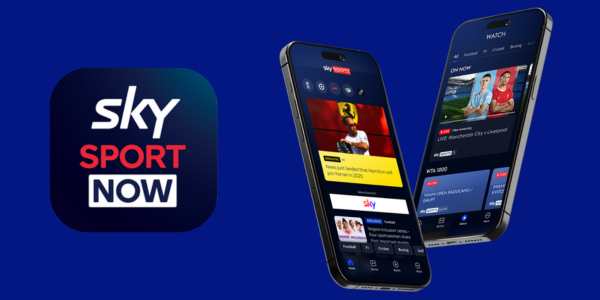
When it comes to English football, Sky Sports is almost a synonym for tradition.
Beyond the matches themselves, its biggest strength is context.
Debates, special shows and statistics help fans understand not just the scoreline, but what’s behind each round.
Usage tip: use the platform to follow decisive matches and in depth pre and post-game analysis.
Disney+

Disney+ has become a practical alternative for fans following the Premier League in regions where ESPN holds the rights.
Another strong point is content organization. Matches, sports shows, and analysis are all gathered in one place, without endless clicking.
Usage tip: ideal for those who want to watch matches and then catch analysis and debates in the same app.
DAZN
DAZN focuses heavily on the digital experience and flexible football consumption.
The idea is clear: follow matches, replays, and on demand content simply, across multiple devices.
It’s a modern way to follow the Premier League without relying on fixed schedules.
Usage tip: make the most of replays and on demand content to catch matches outside live hours.
Prime Video
Prime Video steps in on selected rounds, but with strong impact. Even without showing every match, the platform fits well into fans’ routines.
Everything works intuitively, especially for those who already use the service daily.
Usage tip: keep an eye on available rounds and use the app as a complement to other platforms.
Peacock
Peacock has established itself as one of the main homes of the Premier League outside Europe.
The platform brings together selected matches, full replays, and continuous season coverage.
Usage tip: combine live matches with replays and weekly shows so you don’t miss any detail of the season.
TV Channels
| Region | Main Broadcaster |
|---|---|
| Eastern Europe / Asia | Setanta Sports |
| Middle East / North Africa | beIN SPORTS |
| United Kingdom | Sky Sports / TNT Sports |
| Sub-Saharan Africa | SuperSport |
| Brazil | ESPN / ESPN 2 / ESPN 3 / ESPN 4 |
| Europe | Canal+ |
| United States | NBC Sports / USA Network |
Social Media as a Second Screen
Social media has become a key part of the Premier League experience, allowing fans to follow matches, highlights and conversations in real time.
On Instagram (@premierleague), fans find goals, decisive moments, and behind the scenes content almost instantly.
On X (@premierleague), information flows fast, with live scores and refereeing decisions.
Facebook (Premier League) focuses on longer videos, summaries, and explanatory posts, great for those who prefer a calmer pace.
And on YouTube (Premier League), you’ll find full highlights and post-match analysis, where fans revisit key games and better understand what happened on the pitch.
TV vs. Streaming: What’s the Difference?
Watching the Premier League on traditional TV and via streaming offers different experiences.
TV follows the classic model, with linear broadcasts, fixed commentators, and set schedules.
Streaming brings freedom. You can watch on your phone, switch devices, and choose when to watch.
Another key point is control. With streaming, the fan decides whether to replay a moment, pause, or watch later.
Some platforms even offer multiple matches on screen, something unthinkable on traditional TV.
This flexibility has truly changed how the league is followed.

Why Every Match Matters in the Table
In the Premier League, every game carries real weight. A win earns three points, a draw one, and a loss none.
That means any match can change the course of the season.
An unexpected win shifts positions, puts pressure on rivals, and changes the mood of the round.
For teams fighting relegation, every point becomes a matter of survival. For those chasing European spots, any slip can be costly.
Even mid-table games influence the competition. The Premier League is a puzzle where every piece matters!
How the League has Evolved over the Years
The Premier League was founded in 1992 with a clear goal: modernize English football. Since then, the league has grown in every sense.
Broadcasting rights expanded, taking the competition to hundreds of countries.
As a result, clubs began to invest more in infrastructure, players, and fan experience.
On the pitch, balance increased. Today, it’s not just two or three clubs dominating, but several teams capable of title runs, European qualification, or surprise campaigns.
This evolution turned the Premier League into the most watched league on the planet, global in reach, yet rich in local rivalry and identity.
Derbies that Bring the Country to a Standstill
In the Premier League, some matches need no introduction.
When they appear on the schedule, the country stops, ratings soar, and the atmosphere completely changes.
Must watch Premier League derbies include:
- Manchester United vs. Liverpool: For many, the biggest rivalry in English football, far beyond 90 minutes.
- Manchester Derby (City vs. United): A city dividing clash, intensified by City’s recent dominance.
- North London Derby (Arsenal vs. Tottenham): Fierce local rivalry, deep tradition, and bragging rights at stake.
- Liverpool vs. Everton: The Merseyside derby is a true neighborhood duel, blending history with everyday coexistence.
- Chelsea vs. Arsenal / Chelsea vs. Liverpool: Frequent heavyweight clashes that often decide top table positions.
Without a doubt, these matches transcend the standings.
Greatest Players of all Time
The Premier League’s history is also written by its stars, players who defined eras and changed how football is played.
- Thierry Henry became a benchmark for talent, pace, and decisive goals.
- Alan Shearer built the league’s all time scoring record with consistency and presence in the box.
- Cristiano Ronaldo used the competition as a platform to become a global superstar.
- Wayne Rooney embodied power, skill, and deep club identity across multiple seasons.
More recently, Kevin De Bruyne has raised the standard in midfield.
Together, these players helped cement the Premier League as a global spectacle.
Following the Premier League today means experiencing football on several levels at once.
Matches, in depth analysis, social media conversations and rich history all come together, connecting every round of the season.
With the right platforms and quality information, each game makes more sense.